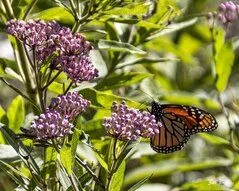
It may be Pollinator Week, but here at Connecticut's Beardsley Zoo, we like to celebrate pollinators every day! Pollinators are critical contributors to the health of many ecosystems. Transferring pollen from one plant to another, pollinators help plants grow and reproduce. At the Zoo, staff support pollinators by planting native plants which pollinators rely on for food sources, shelter, and reproduction.
In 2023, the Zoo received a two-year $50,000 grant from M&T Bank, allowing the Education Department to work with the City of Bridgeport to establish five pollinator gardens throughout Bridgeport. Two of the gardens have been planted right in front of the Zoo, adjacent to Beardsley Park. The three other garden locations are Fairchild Wheeler Interdistrict Magnet School, Sacred Heart University's Discovery Science Center and Planetarium, and Wakeman's Boys and Girls Club.
In 2024, the Education Department won the Significant Achievement in Conservation Education award from the Association of Zoos and Aquariums for their Cool Blue Bridgeport program. The Cool Blue Bridgeport program includes educating Bridgeport residents about climate change and supports the initiative to plant the five gardens throughout Bridgeport.
In these gardens, staff and volunteers have planted perennials and annuals to support plant biodiversity and ecosystem health. The native perennials, such as Common Milkweed, Black-eyed Susan, Beardtongue, Purple Coneflower, Wild Bergamot, Garden Phlox, Cardinal Flower, Mountain Mint, and Northern Blazing Star, are adapted to Bridgeport's local growing conditions, allowing them to withstand colder spring temperatures. Milkweed serves as the host plant for Monarch butterflies, which lay their eggs on Milkweed leaves. Additionally, Monarch butterfly caterpillars rely on Milkweed leaves as their main source of food. Annuals, such as Marigolds and Begonias, are planted in self-watering planters in each of the gardens. These annuals are a main source of food for pollinators due to their bright coloration that attracts pollinators to the flowers' nectar and pollen.
When planting, staff needed to ensure that all these plants would have the right amount of sunlight and moisture to grow. Too much or too little sunlight or moisture can negatively affect plant growth. For instance, oversaturation can prevent the plants from getting enough oxygen, resulting in root rot. Soil being too dry and plants being exposed to too much sun can make the plant's leaves dry and wilt. Zoo staff endeavored to meet the standards of Monarch Watch and the National Wildlife Federation to achieve certified status for each of the gardens. For example, Monarch Watch garden certifications require gardens to have at least 10 Milkweed plants. These efforts have resulted in pollinators being observed in these gardens, including honeybees, Monarch butterflies, Eastern Tiger Swallowtails, and a multitude of species of birds.